TRIPS
Editor's PickHakka Tung Blossom Festival
Trip Brief
The Hakka Tung Blossom Festival is held in late spring, when tung flowers bloom all at once across the Hakka hill country of Taoyuan, Hsinchu and Miaoli, carpeting the mountain trails. The bloom is short and varies sl…
Quick Read
Trip Snapshot
- 01
The Tung Blossom Festival has no fixed date; the season is short and depends on the weather, so checking the local weather and bloom conditions before you set out is more reliable than following last year's dates.
en.wikipedia.org - 02
Viewing tung blossoms isn't about choosing a single attraction, but a Hakka hill trail you're willing to walk slowly; follow the fallen flowers upward, and when tired, stop to rest a while.
en.wikipedia.org - 03
In earlier days the Hakka planted tung as a cash crop for its oil and seeds; that beauty growing out of ordinary hills and forests is exactly what makes the Tung Blossom Festival so moving.
en.wikipedia.org
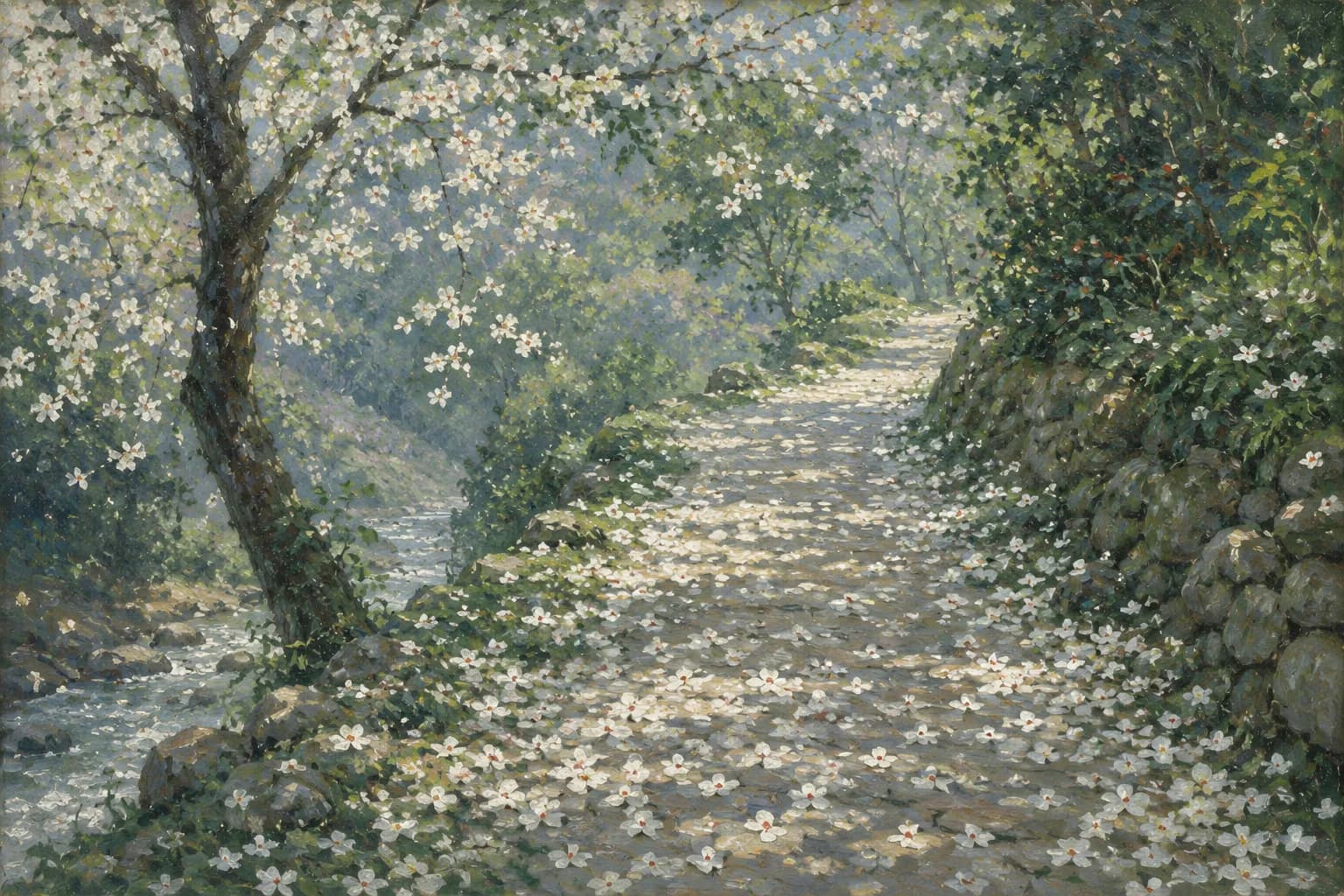
In May, in the Hakka hill country of Taoyuan, Hsinchu and Miaoli, the tung flowers bloom all at once and carpet the trails — a season that turns ordinary hills into scenery.
When should you go to the Hakka Tung Blossom Festival? Is the bloom timing reliable?
The Tung Blossom Festival is held each late spring, falling roughly within that stretch of April to May when the tung flowers are in full bloom. But let me make one thing clear first: the season is short, and the exact timing shifts slightly with the weather each year.
My own experience is that, rather than staring at last year's dates, you're better off leaving the call to the weather. If the year warms early, the flowers bloom early; if there's a lot of spring rain and the warmth comes back slowly, the full bloom gets pushed later. The time I stayed on the mountain until dusk, a week earlier there had only been a scattered few; a few days of warm sun, and the whole hilltop had changed colour.
So instead of asking "which day is the most beautiful," take a look at the local weather and bloom conditions before you set out. For the exact timing, please go by the official announcement — this isn't just a polite formality, but because the timing of these few days really does come down to a matter of days, and the white on the trails can be heavy or faint depending on it.
Where's the best place to see the tung blossoms? Taoyuan, Hsinchu or Miaoli?
The most representative places to see the tung blossoms are the Hakka hill trails around Taoyuan, Hsinchu and Miaoli. It's loveliest when the fallen flowers carpet the trails, and all of these places deliver that.
How to choose? My thinking is simple: don't agonise over which mountain on the map is "the best," but look at where you're setting out from and how deep you want to walk. Most of the Hakka village trails in Taoyuan, Hsinchu and Miaoli can be reached by car, and you can also take a local train and transfer; the difference isn't in which scenery is superior, but in which route is smoother.
The tung blossom is no precious flower; on the ordinary hills behind the Hakka villages it has grown for over a hundred years. And for that very reason, it isn't concentrated at any single spot but scattered across the hill trails of the whole Hakka countryside — in other words, what you're choosing isn't an attraction, but a path you're willing to walk slowly.
Who is the Tung Blossom Festival for? Going alone, with family, or with companions?
This trip, I'd say, is especially suited to people who aren't in a hurry.
The trail has no endpoint you must reach; you simply follow the fallen flowers upward, until you forget how far you'd meant to go. The wind comes in gusts, and the flowers fall in gusts, falling ahead, falling behind, falling into the stream to be carried off by the water. This rhythm lets a person who comes alone settle their mind, and it's just right for walking with family or companions too — no need to rush, walking and pausing, and whoever first spots a flower drifting down gives a call.
That day I stayed on the mountain until dusk before coming down, with flowers all over my clothes and hair that no amount of brushing would clean off. An atmosphere like this is more worthwhile left to those willing to slow down than to those rushing through an itinerary.
How do you arrange transport? Is driving or taking public transit smoother?
For the Hakka village trails of Taoyuan, Hsinchu and Miaoli, both driving and public transit work.
The biggest advantage of driving is flexibility — if the bloom is good you can linger a while longer, and staying on the mountain until dusk needn't worry you about the last bus. If you're not driving, you can take a local train to a nearby station and transfer; most Hakka village trails can be reached this way, you just need to check the schedules first, and especially don't get caught out too late on the way back.
My suggestion is to first decide which area's Hakka village you want to walk today, then work out the transport, rather than letting the bus schedule dictate your route the other way around. After all, the point of this trip is that path carpeted in white flowers; transport just delivers you to the trailhead.
Where to stay, and roughly how much does it cost? Should you stay overnight?
The Tung Blossom Festival is actually well suited to a day trip. Taoyuan, Hsinchu and Miaoli aren't far from the north; up the mountain at dawn, down at dusk, and a single day feels complete.
The fallen flowers are loveliest at dawn and after rain, so if you want to catch the best light, staying a night and rising early the next day to head into the hills will be far more relaxed than rushing it in one day. For lodging you can choose somewhere near a Hakka village, settle in close by once you're off the trail, and conveniently grab a meal along the way.
As for cost, this isn't an expensive trip: the tung blossoms grow on ordinary hills to begin with, so flower-viewing itself costs almost nothing; the main expenses are transport, one or two meals of Hakka food, and the lodging if you decide to stay overnight. Saving your budget for a good meal and a good walk is more worthwhile than anything else.
How do you walk the trails? Do you need to be very good at hiking?
Don't make it harder than it is.
Most of these Hakka village trails are paths you could walk any ordinary day, unremarkable on ordinary days; but once the bloom arrives, even the stone steps underfoot are layered white, and suddenly it's worth slowing the step. Walking up the trail, this is a path others may have walked many times, but the blossom season makes it entirely different.
As for how to walk it, I have just one piece of advice: don't set out assuming how far you'll go. Follow the fallen flowers upward, going as far as you can, and when you're tired, sit a while on the stone steps carpeted with fallen flowers. Crouch down to look at the fallen flowers on the ground, pinch up a petal between your fingers — almost weightless, a touch of pale yellow at its heart against the snow-white. These moments of stopping are what the trail truly means to give you.
What should you know before setting out? How to prepare for weather, crowds and clothing?
A few practical things to say up front.
Weather matters most. The fallen flowers are loveliest at dawn and after rain, those are the times most worth walking, but the weather in the hills in late spring is changeable, and the stone steps are slippery after rain. Choose shoes that are non-slip and easy to walk in, and don't wear anything with too fine an upper — petals will stick to them, and so will mud.
As for crowds, the season is short and concentrated in these few days, so the popular trails will inevitably have people. If you want quiet, head into the hills early at dawn, when the light is good and there are fewer people.
For clothing, the principle is easy walking and being able to handle the chill and light rain. It turns cool on the mountain by dusk, so you won't regret bringing a jacket; flowers will fall onto your hair, the back of your hand, your shoulders, cool to the touch — these are the best "decoration" of this trip, and there's no need to deliberately brush them clean.
Walking into a Hakka village, what customs and local flavours are worth noting?
The Tung Blossom Festival ties into Hakka village culture, so this trip isn't only about viewing flowers — it's a day of coming to know the Hakka countryside.
Once you're off the trail, you can visit the settlements, try Hakka cuisine and lei-cha tea, and turn flower-viewing into a window into the Hakka world. The pace in the Hakka villages is slow and the warmth genuine; soften your step a little as you enter a settlement — this is where people live, year after year, not a scene set up specially for anyone.
I remember an old woman who came slowly along with a carrying-pole, the pole rising and dipping with a creak, a few white petals on her shoes; she didn't give the flowers a glance, for to her this was simply May, the same every year. In that moment I suddenly understood: the scenery in your eyes is the everyday of the locals. Carry that understanding into the Hakka village, eat a bowl of lei-cha and a meal of Hakka food, and you'll come closer to this place than by just photographing the flowers.
Why is the Hakka Tung Blossom Festival worth this trip?
Because its beauty grows, quietly, out of the most practical of things.
In earlier days the Hakka planted tung for its oil and seeds, a cash crop to keep a family fed, never for ornament. Once the season passed, no one mentioned it again, and a fallen carpet of it was merely swept away. Yet when these trees "planted for a living" all bloom at once, the whole forest changes colour.
This beauty was not arranged by anyone for you to see; it was always here, blooming every year, falling every year — only these few days, you happened upon it. And to happen upon it at all is, in itself, a kind of luck. Look at the flower-viewing and the Hakka village culture together, and you'll find that what's truly moving about the Tung Blossom Festival isn't how white the flowers are, but how it quietly turns the Hakka people's most ordinary hills and days into a once-a-year scenery.
White blossoms carpet a mountain path no one looks at twice
A single white blossom drifts down and settles on a shoulder — only then a look up: the whole tung tree is in white bloom, and as the wind passes the flowers fall, petal by petal, carpeting the mountain path, settling on the water, like a snow that will not melt. The air holds a faint green of grass and the smell of wet earth, with a thread of some unnamed wildflower's sweetness. In the Hakka hill country of Taoyuan, Hsinchu and Miaoli, just for these few days of May, there is a sight like this.
Executive Summary
Bloom season
Held each late spring, roughly during that stretch of April to May when the tung flowers are in full bloom; the season is very short, and the exact timing depends on bloom conditions — go by the official announcement.
Location
The most representative places for viewing tung blossoms are the Hakka hill trails around Taoyuan, Hsinchu and Miaoli, loveliest when fallen flowers carpet the mountain paths.
Highlight
Tung flowers are scattered across the mountain trails of the whole Hakka countryside, fallen blossoms carpeting the stone steps; off the trail you can drop by the settlements and try Hakka cuisine and lei-cha tea.
Transport
The Hakka village trails of Taoyuan, Hsinchu and Miaoli work by both car and public transit; most trails can be reached by taking a local train to a nearby station and transferring, but check the schedules and return times in advance.
Good to know
Fallen flowers are loveliest at dawn and after rain; in late spring the mountain weather is changeable and the stone steps are slippery after rain, so wear non-slip, easy-walking shoes and bring a jacket. Go by the official announcement for actual bloom conditions.
Trip Brief
City Routes
- Viewing is mostly on Hakka village trails in Taoyuan, Hsinchu and Miaoli; drive or take a local train and transfer
- Bloom is around April–May; dawn and after rain show the fallen flowers best
- Pair it with Hakka villages, Hakka cuisine and lei-cha tea
Rules
Guidelines
Check city notices, transport timing, and opening hours separately instead of relying on one source.
If a plan includes temples or formal ceremonies, follow on-site rules and local notices.
The national holiday window and city-specific extensions can differ, so confirm city timing before final planning.
FAQ
When is the Hakka Tung Blossom Festival held?
It's held each late spring, roughly in that stretch of April to May when the tung flowers are in full bloom. The season is very short and varies slightly each year with the weather, so for the exact timing please go by the official announcement.
Where is the best place to see the tung blossoms?
The most representative places are the Hakka hill trails around Taoyuan, Hsinchu and Miaoli; all of these are beautiful when fallen flowers carpet the trails, and you can choose based on your starting point and the route you'd like to walk.
Is it smoother to go by car or public transit?
Both car and public transit work. Driving is more flexible; by public transit you can take a local train to a nearby station and then transfer to the Hakka village trails, but you need to check the schedules and return times in advance.
Do you need to stay overnight?
Taoyuan, Hsinchu and Miaoli aren't far from the north, so it's well suited to a day trip. If you want to catch the best scenes at dawn and after rain, staying a night and rising early the next day to head into the hills is more relaxed than rushing it in one day.
Are the trails easy to walk? Do you need to be very good at hiking?
Most of these Hakka village trails can be walked any ordinary day; you don't need to be very good at hiking. You can follow the fallen flowers upward, and when tired, sit a while on the stone steps carpeted with fallen flowers.
What should you prepare before setting out?
The weather matters most. The fallen flowers are loveliest at dawn and after rain, but the stone steps are slippery after rain, so wear non-slip, easy-walking shoes; it turns cool on the mountain in the evening, so you can bring a jacket.
Sources
Continue
More trip ideas
Tickets that may fit this trip