Essay
Once you sink in, even checking the time becomes unnecessary
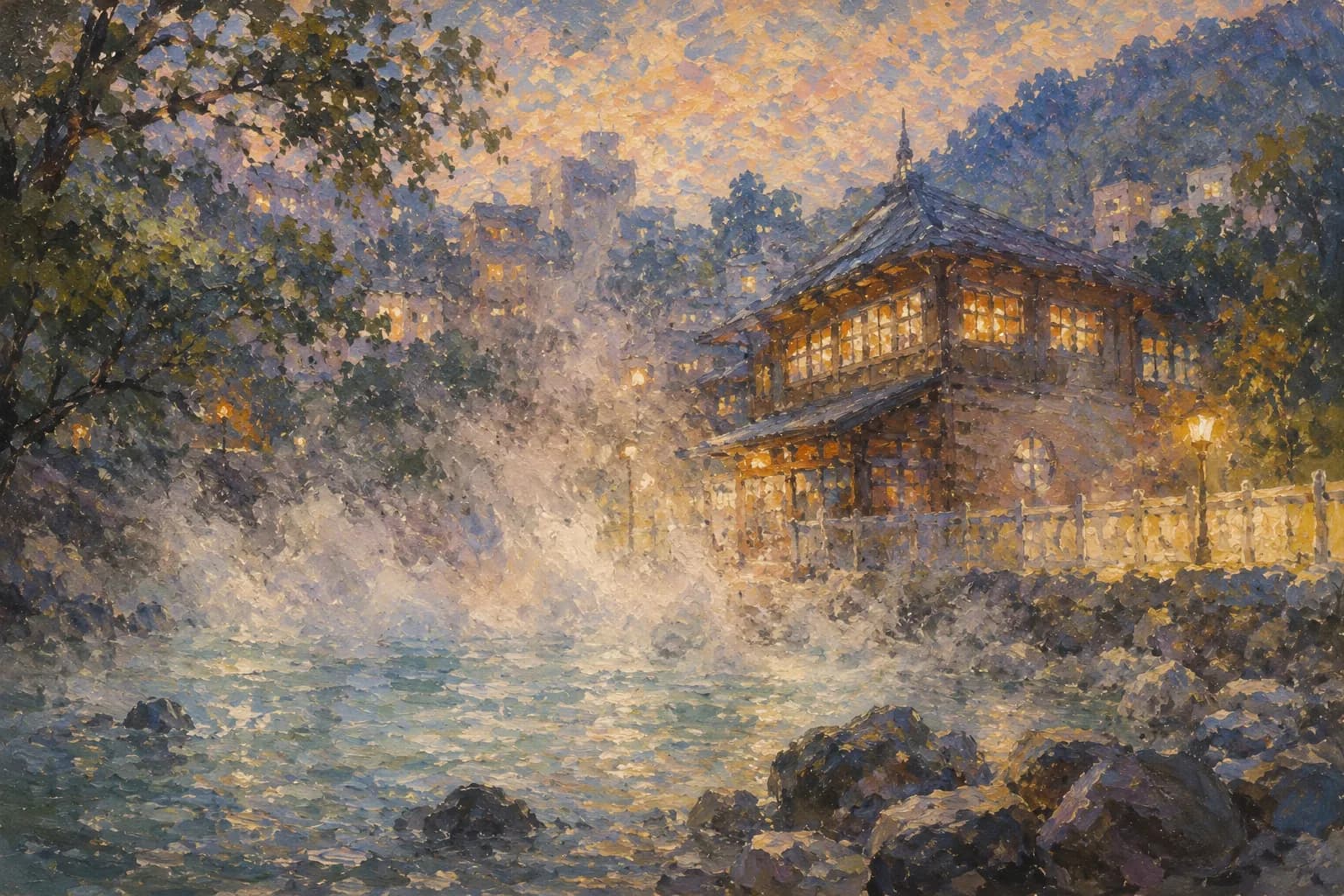
Before the hot spring is even reached, the sulphur arrives first — a smell with a touch of warmth in it, mixed into the mist on Beitou's hillside, a reminder of how far one has come from central Taipei, though it was only some twenty minutes on the metro. The air is damp, the stone steps damp, even the afternoon light as if filtered once through steam, falling warm on the body. Along the stream the water gives off white vapour, and somewhere far off people chat slowly in Taiwanese, their voices, too, softened by the mist.
Beitou's hot springs are a habit the Japanese left behind. In the colonial era it was made a resort for convalescence and bathing; that green-tiled, red-brick hot spring museum was once, in 1913, a public bathhouse, its wooden upper floor still laid with tatami, cool and smelling of old wood underfoot. Not far off, Thermal Valley steams all day, the water too hot to put a hand in, called by locals "Hell Valley," the sulphur crystals staining the rocks a colour somewhere between yellow and green that cannot quite be named.
The instant of sinking into the pool, the sulphur smell comes closer. The skin stings at first, then loosens inch by inch, the shoulders dropping without notice; even the unspeakable tightness the day had packed into the body slowly melts away. A thin white mist floats over the surface; half the face submerged in the warm water, only the eyes above it, watching the mist circle and gather and scatter overhead.
In the next pool an old man sits with eyes closed, half his body sunk in the water, as if he has sat there a whole afternoon, too idle even to move a finger. No one speaks; the whole bathhouse holds only the sound of water, of dripping from the eaves, and far off a bird's cry or two. The steam blurs everyone's outline, no telling clearly who is who — and no need to tell.
After a while, even how much time has passed is no longer certain. There had been plans — where to go next, what hour to leave — and soaking, soaking, they were all forgotten, even pulling out a phone to check the time grown superfluous. The body lighter and lighter, the mind slower and slower, as if dissolving little by little into this warm water, no telling where oneself ends and the water begins.
That time, stepping out after, the sky was already dark, yet the whole self light as if something had been left behind in the water. The sulphur smell still clung to the hair, following all the way down the mountain. I think that "forgetting time" is just what one truly wants from Beitou yet cannot say aloud — not to soak away a day's weariness, but to soak away the self that is always checking the clock, always rushing on.
Essay