Essay
In July, all of Kyoto is one float
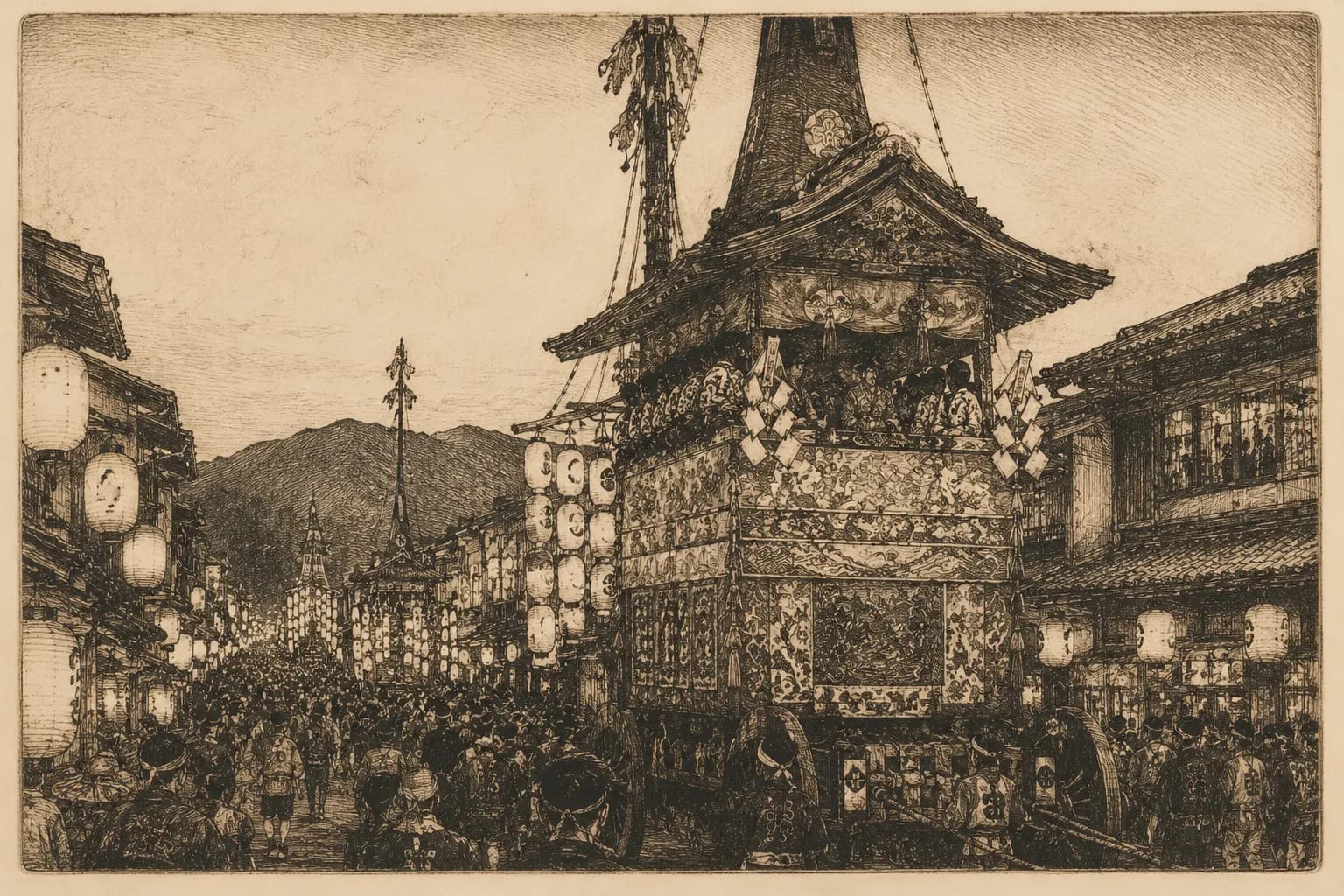
In July, the heat in Kyoto has weight. The asphalt, baked all day, scalds through a shoe's sole; the cicadas surge in from every side, layer over layer, dense enough to take on a shape, and even the wind is warm, pressing the sweat back into the skin. The old quarter's lanes are narrow and deep; round one corner and the float stands there without warning — twenty metres tall, a frame of bare timber, hung tier upon tier with Persian carpets, Belgian brocade and Chinese embroidery that crossed the seas centuries ago. Deep red, indigo, gold thread glow heavily in the slanting light, the colours so dense they seem unreal, as if time had tied a knot in this lane and could not work it loose.
By the float an old man sits on a folding chair, his face emptied, as if guarding something he has guarded for decades. Closer in, the smell arrives first: old wood roasted a full day in the sun, dry, with a thread of resin's after-sweetness; the textiles' edges have frayed to fuzz, the gold thread dimming in the seams and brightening again. A gust passes and the whole float's tassels sway, a faint rustle, the timber answering low from beneath — a creak, like an old beast turning over in its dream. These things are older than anyone present, older than their grandfathers.
The float has stood here every July for centuries. Gion Matsuri is rooted in a plague over a thousand years ago — sickness was thought to be the work of vengeful spirits, so the long halberds were borne out through the streets, gathering the unseen calamity and carrying it away. Those textiles, lavish past all reason, were never display; they are how a whole city, in the most solemn way it could conceive, tamed its collective fear, year by year, into a kind of grandeur. Look up at the float's crown against the daylight and a strange closeness rises: what people feared a thousand years ago, and what sits in the chest right now, are not so far apart.
Yoiyama falls on the night of July 16th. As dark comes the towns' yamaboko light up one after another, and the screens and tapestries usually locked deep in storehouses lie out along the street these few days, near enough to touch. Rows of koma-gata lanterns hang down, their warm light steeping the whole lane honey-coloured; the gion-bayashi — gong, flute, drum — flows slowly down from some unseen upper floor, ting — ting — ting, slow as if keeping time for a very long dream. The smells change shift too: the daytime wood and dust withdraw, and the savour of takoyaki, the burnt-sweet of grilled corn, the incense smoke from the temple eaves all melt into July's thick heat, clinging to collar and hair.
Wander the narrow lanes toward Shijo and Karasuma and every corner may hold another float, another machiya's old story. An old woman sits at a doorway selling the chimaki hung from the lintel — not food, but a charm tied by hand. The bamboo leaf is fresh, a damp grass scent opening between the fingers, the knot coarse and a little prickly to hold. She ties and chats with the regulars, hands never stopping, that ease as if time in this lane were born half a beat slower than elsewhere. Tucked into a bag, the chimaki gives off its green-grass smell all night and will not let it go.
On the morning of leaving Kyoto, the room is clean and bare, yet without warning the Yoiyama market rises again in the nose — takoyaki, grilled corn, incense smoke, and July's heat along with it. The smell isn't in the room; it was carried back all this way, hidden in the still-unopened chimaki, and in the stickiness the skin still remembers. The centuries-old float will remember no one; but whoever remembers it will, on summer afternoons ever after, when the cicadas cry as one, think of that lane for no reason — it was turning that corner before you were born, and after you are gone it will be turning still. Only later did I slowly come to understand: some things are solemn precisely because they never stay for anyone.
Essay