TRIPS
Editor's PickExperience the Vibrant Baliem Valley Festival in Indonesia 2026
Trip Brief
The Baliem Valley Festival is held in Wamena, West Papua, Indonesia, set in the deepest valley of the Papuan highlands. The Dani, Lani, Yali and other peoples gather together to lay out, over several days, the dress, …
Quick Read
Trip Snapshot
- 01
The Baliem Valley Festival is held in the deepest valley of the Papuan highlands, home to the Dani, Lani and Yali peoples. This valley was not discovered by the outside world until the 1930s, making it one of the last…
en.wikipedia.org - 02
The festival is not a show built for tourism, but the peoples truly gathering together to lay out, over several days, the dress, songs, dances and rites passed down through generations, carrying on the music and dance…
en.wikipedia.org - 03
Enter with respect, treating yourself as a guest who has been invited in. The mock war scenes are intense, so when standing in the direction of the charge, mind your own position and keep a safe distance; the pig behi…
en.wikipedia.org
Fly into the deepest valley of the Papuan highlands and watch the Dani people lay out, over a few days, the songs, dances and rites passed down through generations.
What is the Baliem Valley Festival 2026? Why is it worth flying all the way out for?
The Baliem Valley Festival is held in the Baliem Valley, the heart of the Papuan highlands. The valley lies so deeply hidden that it was not "discovered" by the outside world until the 1930s, making it one of the last places on earth to meet the modern age. The people who live here are the Dani, Lani and Yali.
The heart of the festival is the laying out, over a few days, of the dress, song, dance and rites passed down through generations. It is not a show built for tourism, but the peoples truly gathering together, carrying on the music and dance of Indonesia's indigenous tribes and promoting their cultural heritage. For me, the reason this trip is worth it is simple: some places are not come to in order to be understood, but to remind you that the world is larger, older and richer than you had supposed.
When is the festival held? How do you read the official dates?
According to the official announcement, the 2026 festival runs from April 19 to 25, with Wamena as the main venue.
One thing to note: the scheduling of highland festivals may be adjusted slightly from year to year, and the exact opening and the timing of each session still follow the official announcement. I would suggest checking the official information once more before you set off, pinning down the sessions of the headline events like the mock war and the earth oven, so you don't fly all the way out only to miss the core moments.
Where is the festival? How should you place Wamena as a location?
The venue is Wamena, located in West Papua, Indonesia. It is not a big city, but a settlement hub within the Papuan highlands, with mountains on every side.
When you land at Wamena, the altitude is already over sixteen hundred metres, the air far colder than the lowlands. Out of that tiny airport, people sit at the stalls along the road — men wearing the traditional Koteka, women in skirts woven of grass. Think of Wamena as the gateway to a highland valley: it is remote and quiet, yet it is the heart of the whole festival and of the culture of the entire valley.
It's so remote — how exactly do you get to Wamena?
This is the question most people get stuck on, because Wamena really is remote. In practice, from Jayapura and its surroundings to Wamena, you can take a taxi or a plane, with the journey taking about 45 minutes.
For a settlement deep in the highlands, this leg is actually shorter than you might imagine. My advice is: first fly yourself to the Jayapura area as a regional hub, then transfer to this roughly 45-minute connection into Wamena. Mountain weather is changeable, so please be sure to leave flexibility in your flights and connection times, and follow the announcements of the local authorities and operators, and don't pack your itinerary too tightly.
Who is this festival for? Will I just not get it?
If what you like is a real, unpackaged cultural setting, this place suits you well. The mock war, the earth-oven roast pig, the feather headdresses and painted faces are all things happening live in front of you, not performed for the camera.
It also suits travellers going together. On my own trip, a planeload of people who had never met, each flown in alone to see the festival, ended up huddled together sharing a piece of just-baked sweet potato, blowing on it at one another and dissolving into laughter — that morning each sat apart, and now they seemed to have known one another a long time. By contrast, if all you want is a comfortable holiday with full facilities, this highland trip may leave you a little ill at ease, so you should be prepared for that beforehand.
What will you actually see on the ground? Which are the core scenes most worth seeing?
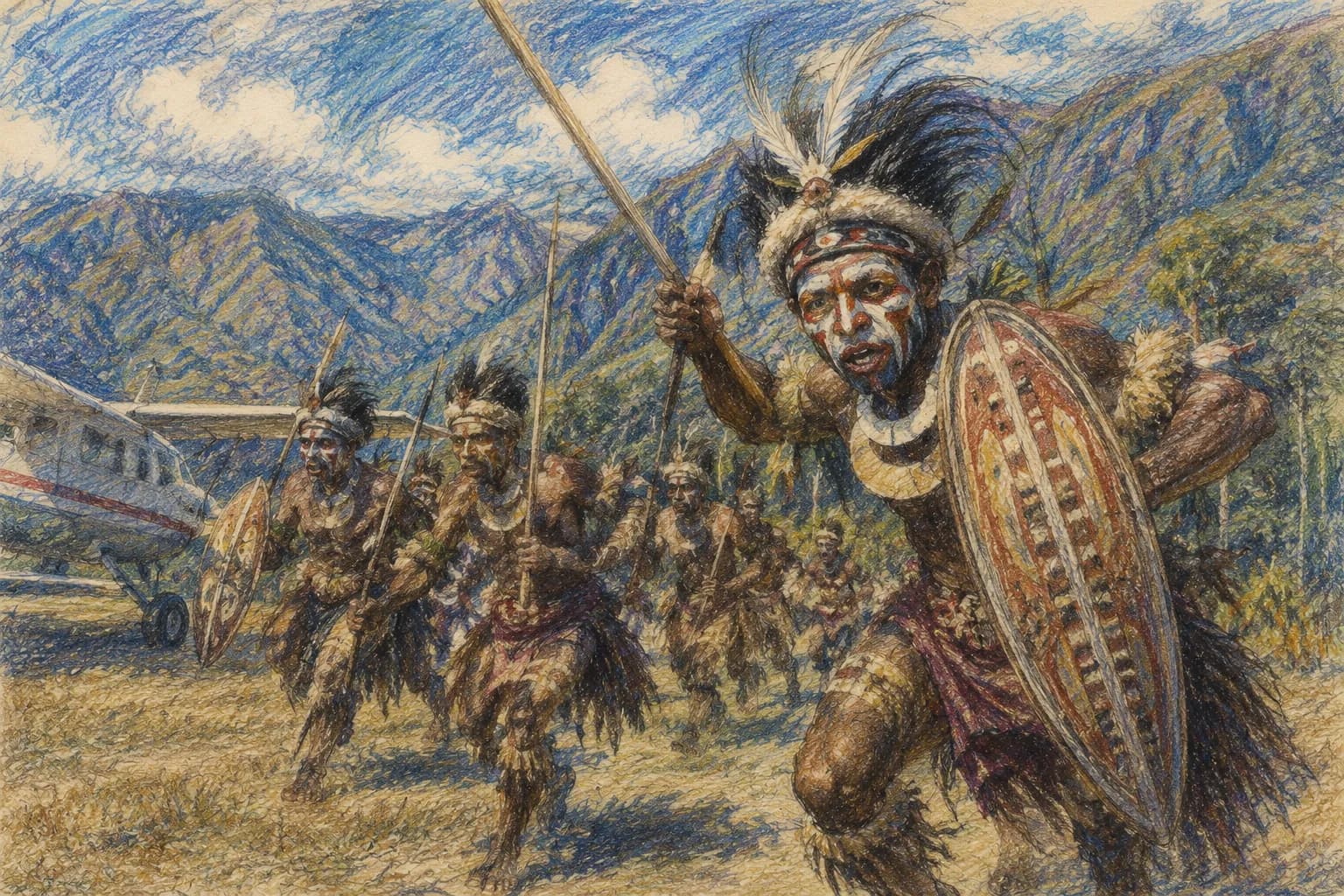
The mock war is at its heart. Two bands of warriors face off across the square, shouting war cries, charging at one another, feather headdresses and painted faces unreally vivid in the sun, drums urging behind. It is a symbolic exercise, to keep the tribe's coordination and skill sharp, never coming to real blows — but when dozens of men charge roaring towards your direction, the body still tightens before the mind can.
On the other side, the women have dug a pit in the ground, lined it with hot stones and leaves, and buried pork and sweet potato in it; this is the highland's traditional earth oven. Here, pig is not only food but wealth, the proof of how much sincerity a family is willing to put forward. The instant the earth oven is opened, steam roars up, the smell of roast pork, sweet potato and heated stones surging out together.
How to arrange it: where to stay, whether to book tickets ahead, how to estimate costs?
For lodging I suggest basing yourself in Wamena — it is the festival's main venue and also the base for going in and out of the valley. With Wamena as your base, watching the events by day and browsing local handicrafts, the itinerary will flow much more smoothly.
For ticketing and session arrangements, please follow the official announcement — the ticketing and admission methods for highland festivals are not necessarily the same every year, so confirm the latest rules before you set off; whether you can and whether you should book should be based on official information, not on judging from old data. As for costs, the main expenses of this kind of remote highland trip usually fall on transport connections and lodging, so I suggest leaving a generous margin in your budget and time, factoring in the uncertainties of the mountains.
What should I wear? How should you prepare for the high altitude and the climate?
This question has two sides to think about together. The official advice: the climate during the festival is quite hot and humid, suited to simple clothes and shoes.
But don't forget that Wamena is over sixteen hundred metres in altitude, and the moment I stepped off the plane I was woken by the highland's cold wind — the air is far colder than the lowlands, and the lungs need a while to adjust. So my approach is to dress in layers: light and breathable for the hot, humid daytime, with a jacket added for the cooler mornings, evenings and higher ground. As for shoes, go for ones that are easy to walk in and don't show dirt, because the setting is a dirt square and mountain terrain.
Etiquette and safety on the ground: what to watch for when facing tribal rites?
In terms of mindset, please enter with respect. The song, dance and rites here are culture passed down through generations and carried on in earnest, not a spectacle for consumption. Although the mock war is only a symbolic exercise and never comes to real blows, the scene is intense, so when you stand in the direction of the charge, please mind your own position and keep a safe distance.
Traditions like the earth oven carry meaning behind them — the pig represents wealth and sincerity, and once you understand this layer, what you see is more than just "a meal." Treat yourself as a guest who has been invited in, watching more and disturbing less, and this festival will give back to you something far deeper than the surface.
When is the best time to watch? How do you arrange a day most smoothly?
The best time to watch the dance performances is in the evening. The light is soft, the temperature has turned cool from the hot, humid daytime, and the whole square's atmosphere fits better.
The rhythm I suggest is: by day watch the big scenes like the mock war and the earth oven, and along the way explore the natural scenery of Wamena and buy some local handicrafts; save the dance performances for a close watch in the evening. This makes the day's ups and downs just right, and lets you better keep pace with the highlands, so you aren't drained all at once by the blazing sun and the altitude.
After you leave, what will this trip leave in your heart?
As the plane left Wamena, I leaned to the window and looked down; the valley quickly shrank and then was covered by cloud. In my mind turned that waving child, those pigs counted as wealth, those feather headdresses unreally vivid in the sun — in truth I had not yet thought any of it clearly through.
But I think that if you too had come, you would likely understand as we did: some places are not come to in order to be understood, but to remind you that the world is larger, older and richer than you had supposed. This is what makes the Baliem Valley Festival most worth it.
You land at sixteen hundred metres, and warriors charge before you
When the plane landed at Wamena, the altitude was already over sixteen hundred metres, the air far colder than the lowlands, the lungs needing a while to adjust. Out of that tiny airport, mountains on every side, people sitting at the stalls along the road — men wearing the traditional koteka, women in skirts woven of grass, a few children waving to this group of outsiders, laughing generously. A planeload of people who had never met, each flown in alone to see this festival, were woken together by the highland's cold wind.
Executive Summary
Festival Dates
August 6 to August 8, 2026
Location
Wamena, located in West Papua, Indonesia, a settlement hub within the Papuan highlands
Altitude
Wamena sits at over one thousand six hundred metres in altitude, with air far colder than the lowlands
Core Scenes
Mock warfare and the traditional highland earth oven, with the songs, dances and rites of the Dani, Lani and Yali peoples on display
Getting There
From Jayapura and its surroundings you can take a taxi or a plane to Wamena, with the journey taking about 45 minutes
Best Time to Watch
The evening is the most suitable time to watch the dance performances
Trip Brief
City Routes
- Attend the festival's opening ceremony to witness the grand procession of the traditional tribal leaders, Experience the authentic Papuan cuisine at one of the many food stalls, Explore the surrounding mountains and valleys for a glimpse into the local lifestyle
- Marvel at the stunning scenery of Baliem Valley during the festival, Learn about the traditional tribes' customs and practices, Be prepared for unpredictable weather conditions
Rules
Guidelines
Check city notices, transport timing, and opening hours separately instead of relying on one source.
If a plan includes temples or formal ceremonies, follow on-site rules and local notices.
The national holiday window and city-specific extensions can differ, so confirm city timing before final planning.
FAQ
When is the Baliem Valley Festival 2026 held?
The festival runs from August 6 to 8, 2026. The scheduling of highland festivals may be adjusted slightly from year to year, so the exact opening and session times still follow the official announcement.
Where is the festival held?
The venue is Wamena, located in West Papua, Indonesia, a settlement hub within the Papuan highlands, surrounded on all sides by mountains.
How do you get to Wamena?
From Jayapura and its surroundings you can take a taxi or a plane to Wamena, with the journey taking about 45 minutes. Mountain weather is changeable, so leave flexibility in your flights and connection times, and follow the announcements of the official authorities and operators.
What core scenes will you see on the ground?
At the heart is the mock war: two bands of warriors face off at opposite ends of the square, charging at one another, in a symbolic exercise. On the other side is the traditional highland earth oven, where pork and sweet potato are buried among heated stones to cook; the pig locally represents wealth and sincerity.
What should you wear?
The official advice is that the climate during the festival is quite hot and humid, suited to simple clothes and shoes. But Wamena sits at over one thousand six hundred metres and is cooler in the mornings and evenings, so dressing in layers and bringing a jacket is recommended.
How do you arrange a day most smoothly?
By day, watch the big scenes like the mock war and the earth oven, and along the way explore the natural scenery of Wamena and buy some local handicrafts; save the evening, when the light is soft and the temperature has turned cool, for a close watch of the dance performances.
Sources
Continue
More trip ideas
Tickets that may fit this trip