Essay
You land at sixteen hundred metres, and warriors charge before you
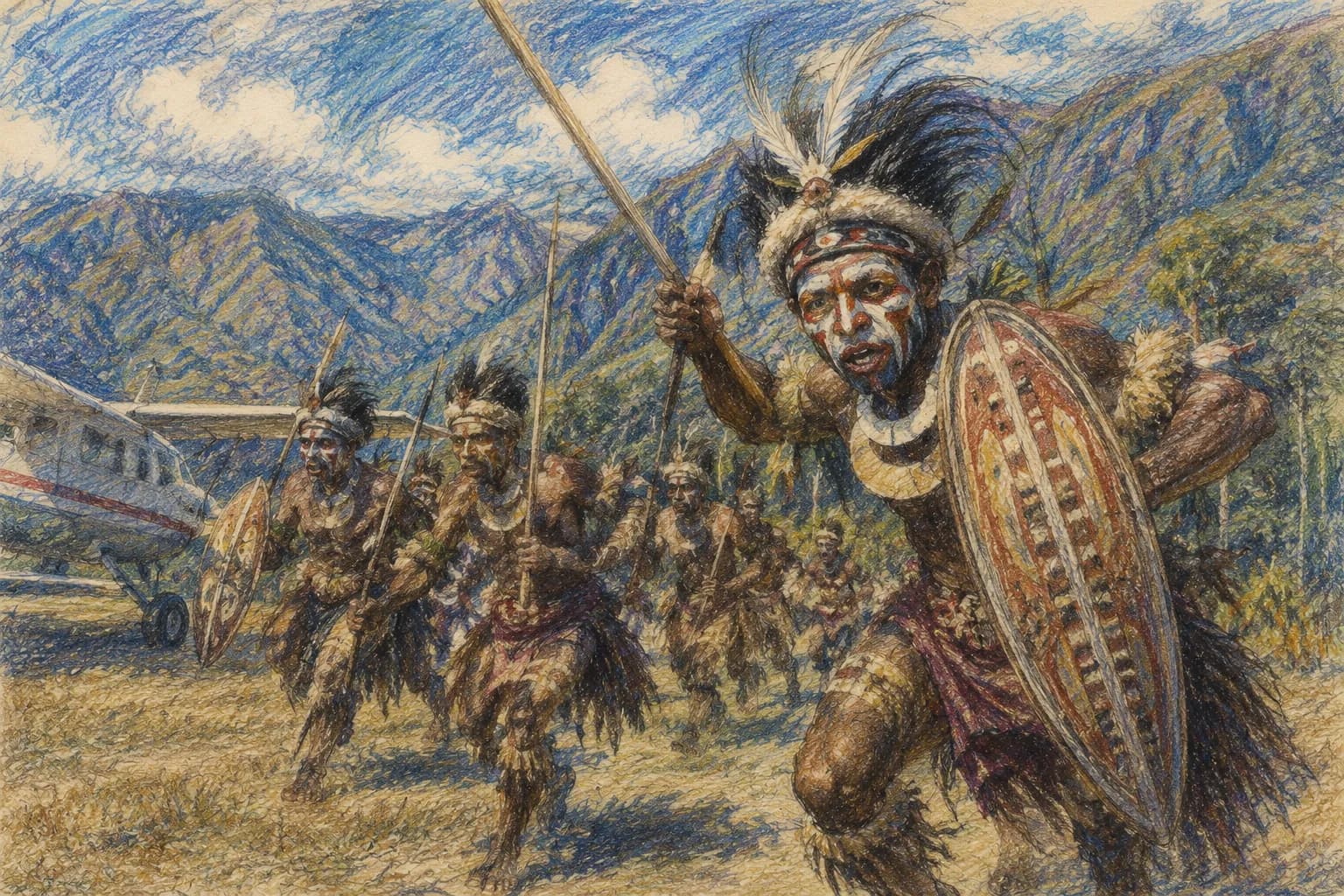
When the plane landed at Wamena, the altitude was already over sixteen hundred metres, the air far colder than the lowlands, the lungs needing a while to adjust. Out of that tiny airport, mountains on every side, people sitting at the stalls along the road — men wearing the traditional koteka, women in skirts woven of grass, a few children waving to this group of outsiders, laughing generously. A planeload of people who had never met, each flown in alone to see this festival, were woken together by the highland's cold wind.
This is the Baliem Valley, the heart of the Papuan highlands, home to the Dani, Lani and Yali peoples. The valley lies so deeply hidden that it was not "discovered" by the outside world until the 1930s — one of the last places on earth to meet the modern age. Each August the peoples gather here to hold a festival, laying out in a few days the dress, song, dance and rites passed down through generations.
The mock war is at its heart. Two bands of warriors face off across the square, shouting war cries, charging at one another, feather headdresses and painted faces unreally vivid in the sun, drums urging behind. It is a symbolic exercise — to keep the tribe's coordination and skill sharp, never coming to real blows. Yet when dozens of men charge roaring towards your direction, standing there, the body tightens before the mind can.
On the other side, the women have dug a pit in the ground, lined it with hot stones and leaves, and buried pork and sweet potato in it — this is the highland's traditional earth oven, their way of cooking a meal. Pig here is not only food but wealth, the proof of how much sincerity a family is willing to put forward. An old man crouches by the pit tending the fire, the smoke making him squint, yet his look is content, like one presiding over a thing more important than a meal.
The instant the earth oven is opened, steam roars up, the smell of roast pork, sweet potato and heated stones surging out together, mixed with the highland's thin, cold-clear air. That planeload of strangers has by now drawn together, sharing a piece of just-baked sweet potato, blowing on it at one another, dissolving into laughter — that morning each sat apart, and now they seem to have known one another a long time.
As the plane left Wamena, everyone leaned to the window to look down, the valley quickly shrinking and then covered by cloud. Thinking of that waving child, those pigs counted as wealth, those feather headdresses unreally vivid in the sun — in truth none of it yet thought clearly through. But I think if you too had come, you would likely understand as we did: some places are not come to in order to be understood, but to remind you that the world is larger, older and richer than you had supposed.
Essay