TRIPS
Editor's PickPenghu Fireworks Festival
Trip Brief
The Penghu Fireworks Festival is held around Guanyinting in Magong, Penghu, with fireworks set off over the sea and reflected on the night water. The event usually runs across multiple sessions spanning several weeks …
Quick Read
Trip Snapshot
- 01
The Penghu Fireworks Festival is held around Guanyinting in Magong, with fireworks set off over the sea and reflected on the night water — one of Penghu's signature summer events.
en.wikipedia.org - 02
In 2026 the event runs between May 4 and August 25, across multiple consecutive sessions spanning several months; exact dates are subject to the Penghu National Scenic Area's official announcement.
en.wikipedia.org - 03
The main viewing area is around the Guanyinting seawall and the Xiying Rainbow Bridge, where you can see both the fireworks and their reflection on the sea; during the day you can pair your trip with the Trans-Ocean B…
en.wikipedia.org
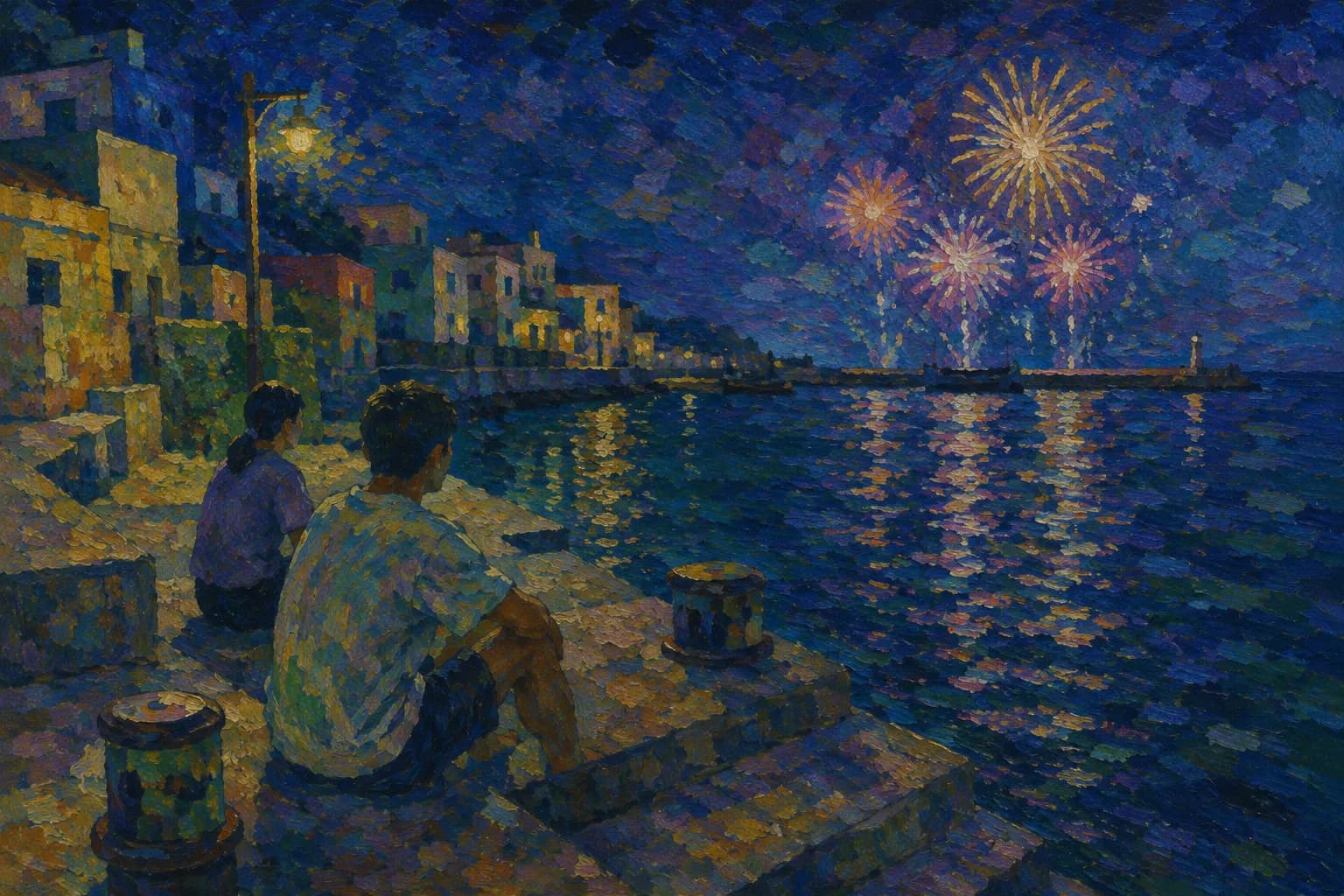
On a summer night at Guanyinting in Magong, the fireworks burst over the sea and shattered into gold — and we realized the beautiful part isn't the sky, it's the water.
What kind of event is the Penghu Fireworks Festival?
The Penghu Fireworks Festival is one of Penghu's most iconic summer events, held each summer around Guanyinting in Magong. What makes it most special is that the fireworks aren't set off on land — they're launched over the sea. The light splits open across the night sky and falls again, while its reflection shatters into gold across the water at the same time, swaying with each wave.
By the bay stands a steel arch bridge called the Xiying Rainbow Bridge, and the fireworks burst over the sea behind it. When the first one went up, I truly understood: everyone tilts their head back to photograph the sky, but it's this sea that is the real star. The wind is salty, carrying a faint scent of seaweed, cool on skin that has been in the sun all day, as if someone had gently turned down the heat for you.
When is the festival held? How many sessions are there?
The festival is held each summer, usually across multiple sessions over several weeks, not just a single night. Because of this, you don't have to lock onto one particular day — just pick a session that fits your itinerary.
As for the exact opening day and the date of each session, they change every year. My advice is simple: before you set out, go straight to the Penghu National Scenic Area's official notice for that year, copy down the session schedule, and then arrange your own flights and ferries around it. Get the dates lined up first, and the rest of the planning won't be wasted effort.
How do you get to Penghu to see the fireworks?
Penghu lies in the sea off Taiwan's main island, and there have always been just two ways to get there: by plane or by boat. Flying a domestic route to Magong from the main island is fastest, and once you land you're not far from Guanyinting; if you want to save a little, or bring more luggage, you can also take a passenger ferry across to Magong.
Summer is Penghu's peak season, and crowds are even more concentrated during the festival, so both flights and ferries are in high demand. In my experience: the moment you see the session notice, book your transport first — don't wait until you've worked out every other detail of the trip. By then, the good seats are often already taken.
Who is this event for?
If what you love is the double image of "fireworks plus the sea," rather than just watching fireworks alone, then Penghu suits you well. The Guanyinting seawall fills up with all kinds of people: some bring beer, some bring children, and one old man set his folding chair at the very edge closest to the sea, his back to the fireworks, watching that shattered gold too.
It's equally suited to anyone looking for a travel companion to slow down with on a summer night. The two of us spent that night looking down at the water, shoulder against shoulder, neither of us speaking, just waiting for the dark, for the first shot. That mood of waiting quietly together is more memorable than the fireworks themselves.
How do you plan the trip? Where to stay, how to budget?
The festival runs from dusk into the night, so the daytime can be left for Penghu itself. For lodging, I'd suggest staying close by in Magong — you can walk back after the fireworks at night, and it's convenient to keep exploring the next day.
The spending mainly falls into three parts: the flights or ferry tickets to and from the main island, lodging in Magong, and food and drink on site. Prices rise in peak season, which is another reason to book early. Lock down transport and lodging first, and the remaining spending is actually the most flexible and easiest part to control.
Where can you go during the day, and how do you island-hop?
Penghu by day is another thing entirely: basalt coasts baked scorching hot, low vegetable plots behind coral-stone walls, the sea an unreal blue. Before the evening heat retreats is the perfect time to take in this coastal scenery.
Starting from Magong, you can pair your trip with Penghu coastal sights like the Trans-Ocean Bridge and the twin-heart stone weir. You can also island-hop to see more island scenery, but remember to leave plenty of slack in your return time — you have to be back at Guanyinting by dusk so you don't miss that night's session.
How do you choose a spot to watch on site?
The main viewing area is the Guanyinting seawall and the Xiying Rainbow Bridge area in Magong, where you can see both the fireworks in the sky and their reflection on the sea at the same time — the angle that makes this event most worthwhile. The closer to the sea you are, the more clearly you can see that shattered gold on the water.
Once the evening heat retreats, the seawall slowly fills with people, and stalls selling cuttlefish balls and prickly-pear ice light up, the air afloat with the savour of fried food and the salt of the sea. To get a good spot, go early to claim it, find a place by the sea and sit down, and eat while you wait — that itself is part of the night.
What should you know before you go?
First, the sea wind and the weather. The wind by the sea at night is salty, and it turns cool after a while, so a light jacket won't go amiss; the daytime sun is strong, so do your sun protection thoroughly.
Second, the crowds. The Guanyinting area is very crowded during the festival, so claim your seawall spot early. Third, and most important — book lodging and tickets early. Summer is peak season, and I'd recommend arranging transport and lodging in advance as soon as you see the session notice; don't put it off. Finally, all exact dates and sessions are to follow the official notice, without exception.
Why is this sea-launched fireworks show worth a trip in its own right?
Because it puts the fireworks back on the sea. At Guanyinting in Magong, what you watch is not just the sky, but the fireworks' reflection on Penghu's night sea — a scene that isn't easy to find elsewhere. And this summer-night event actually grew out of a low point: held year after year, two decades on it has become the few nights when the whole island most feels like itself.
What's even more worthwhile is the moment after the fireworks take their bow. That night we didn't rush off; the sea returned to a deep blue-black, only a few fishing lights far out, and the sound of the waves became the lead again, one after another, unhurried. I think you too will slowly find: what you truly remember isn't which shot was biggest or loudest, but those few minutes when the sea went quiet again. And the person beside you who heard it with you will, years from now, thinking of this sea, likely think first of you.
The fireworks are really the supporting act
When the first firework goes up, one realises one has been watching the wrong thing all along. The light splits open over the sea and falls again, but the truly beautiful part is not the sky — it is the water: the fireworks' reflection shatters into gold across Penghu's night sea, swaying with each wave. The wind is salty, carrying a little seaweed and diesel, cool on skin that has been in the sun all day, as if someone had gently turned down the heat.
Executive Summary
Event period
May 4 to August 25, 2026, with multiple consecutive sessions spanning several months
Location
Around Guanyinting and the Xiying Rainbow Bridge in Magong, Penghu
Highlight
Fireworks are set off over the sea, reflected on the night water
Main viewing area
Around the Guanyinting seawall and the Xiying Rainbow Bridge in Magong, where you can see both the fireworks and their reflection on the sea
Transport
Reach Magong by domestic flight or passenger ferry from the Taiwan main island
Trip Brief
City Routes
- Reach Magong by domestic flight or ferry from the Taiwan main island
- Multiple sessions over weeks; the Guanyinting seawall is the main viewing area
- Pair it with the Trans-Ocean Bridge and the twin-heart stone weir
Rules
Guidelines
Check city notices, transport timing, and opening hours separately instead of relying on one source.
If a plan includes temples or formal ceremonies, follow on-site rules and local notices.
The national holiday window and city-specific extensions can differ, so confirm city timing before final planning.
FAQ
When is the Penghu Fireworks Festival held?
In 2026 it is held between May 4 and August 25, usually across multiple consecutive sessions spanning several months. The exact opening day and the dates of each session are subject to that year's official announcement by the Penghu National Scenic Area.
Where is the festival held, and where is the best place to watch?
The event is held around Guanyinting in Magong, with fireworks set off over the sea. The main viewing area is around the Guanyinting seawall and the Xiying Rainbow Bridge, where you can see both the fireworks and their reflection on the sea — the closer to the water, the clearer the reflection.
How do I get to Penghu to see the fireworks?
Reach Magong by domestic flight or passenger ferry from the Taiwan main island. Summer is peak season, and crowds concentrate during the festival, so flights and ferries are in high demand; once the session schedule is announced, it's best to arrange transport right away.
Where should I stay?
It's recommended to stay nearby in Magong, so you can walk back after watching the fireworks at night and easily continue your itinerary the next day. Lodging prices rise during the peak summer season, so book ahead.
Where can I visit during the day?
Starting from Magong, you can pair your trip with Penghu coastal sights such as the Trans-Ocean Bridge and the twin-heart stone weir. If you want to island-hop, leave plenty of slack in your return time — you need to be back at Guanyinting by dusk so you don't miss that night's session.
What should I know before going?
The wind by the sea at night is salty and turns cool after a while, so bring a light jacket; the daytime sun is strong, so apply sun protection thoroughly. The festival draws large crowds, so it's best to claim a spot on the seawall early.
Sources
Continue
More trip ideas
Tickets that may fit this trip