Essay
A magnificent boat, built only to be burned at dawn
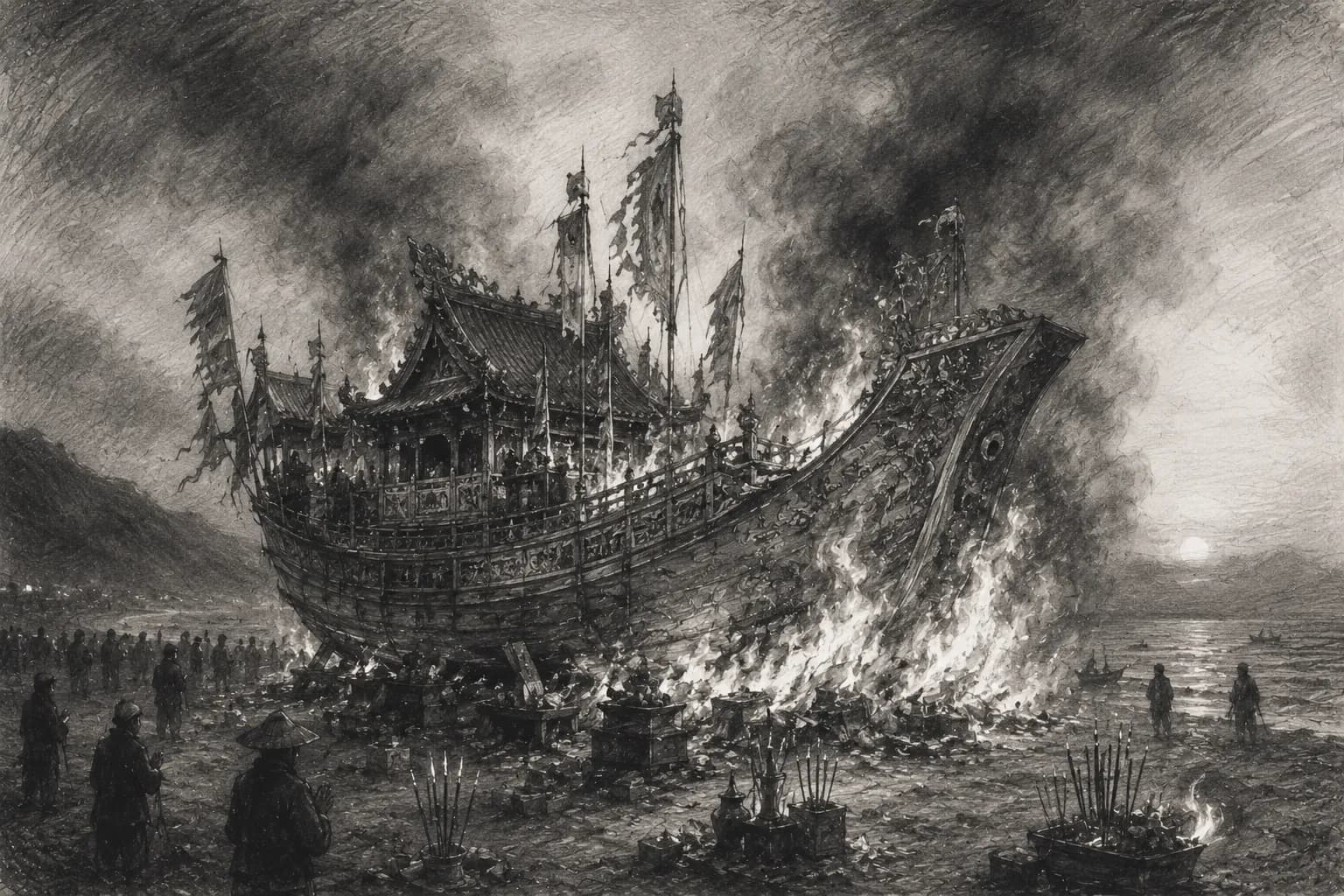
The king boat is far finer than imagined — a wooden hull lacquered gold and red, carved beams and painted rafters, even the cooking gear, weapons and keel all in place, as if it truly meant to sail far out to sea. The sea wind is salty, snapping flag after flag on the boat, the surf surging in wave by wave not far off. Yet its end is long settled: on the festival's final night it will be set alight on the shore and burn to ash.
This is the Donggang Welcoming the Kings Peace Festival in Pingtung, held once every three years. Lord Wen, the Wangye enshrined at Donglong Temple, tours the realm on Heaven's behalf — welcomed in, worshipped for several days, then reverently sent back out to sea. Plague was relentless along Taiwan's coast in the old days, and people believed the Wangye would gather the disease, the calamity, all the unclean things into this boat and carry them away — so the boat was never built to sail, but to bear off everything a whole place wishes gone.
A king boat takes months to build, all by hand, made like a real ship, nothing skimped even where no one will look. One cannot help wondering: is it worth such effort to build a boat doomed to burn? But stand beside it long enough and it comes clear — precisely because it must be sent off with gravity, it must be built with gravity. When what is sent away weighs enough, the makers will not cut corners. A fingertip over the carving on the gunwale: the wood polished smooth, the lacquer's smell still new.
On the final night the boat is eased onto the beach, heaped all round with a small mountain of joss paper. The crowd falls quiet, and the sound of the tide grows suddenly clear. An old man bows deeply to the boat three times, his movements slow; he has surely bowed from his youth until now, once every three years, never once absent. No one hurries him; the whole beach simply waits for him to finish.
When the fire takes hold, the sky is not yet light. The whole boat burns orange-red on the dark shore, sparks drifting up to mingle with the stars not yet faded, waves of heat pushing against the face and alternating with the cool of the sea wind. The joss paper crackles, the flames climb the mast, casting every face a warm orange. No one cheers; everyone only watches.
Watching the frame collapse inch by inch, the fire shrinking little by little, the crowd at last turns and leaves, one by one. That dawn fire goes on burning behind the eyes a long while after. I think once you have seen it you will understand too: some things are built with such care precisely so they can be sent away well — and learning how to take a solemn leave is, perhaps, just what this seaside town means to teach, once every three years.
Essay