Essay
You will be soaked through, and then you will fall for this place
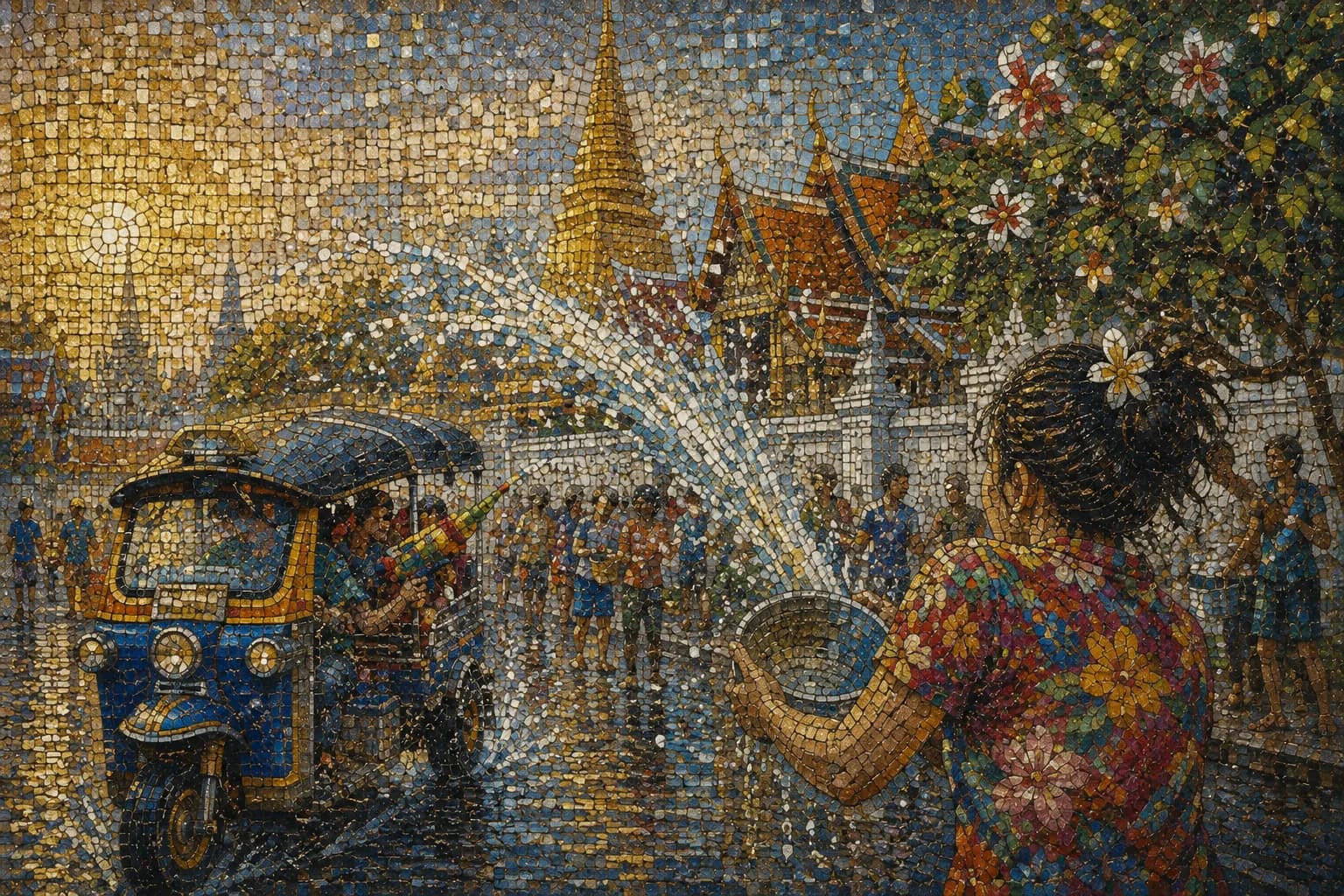
One knows within the first second of leaving the hotel. The street is not even in focus when something drenches the back — turning round, it is a child of about ten, hoisting a water gun longer than himself, beaming the most pleased of grins this way. This is Chiang Mai in April, the second day of Songkran, the Thai New Year. The back soaked through, the sun fierce, and yet a laugh escapes — and to laugh is to surrender: from here on, the whole street takes you for a target.
Songkran is the Thai New Year, falling in the hottest middle of April. At first it was not raucous at all: people poured fragrant water gently over Buddha images, then a little into the palms of their elders, called rot nam dam hua, washing off the old year's ill luck and offering respect and blessing. Later this blessing "given by water" grew and grew, until it became today's street-wide spectacle of water guns and buckets — so when you are soaked to the skin, what is being poured over you is in fact a whole year's good fortune.
The four streets ringed by the moat are the liveliest, lively to the point that no one can tell who is attacking whom. At the temple gates jasmine-and-rose scented water is kept ready, and when it lands the fragrance hangs in the air a few seconds, mixed with the scorching April, a strange yet pleasing smell. An old woman sits under the eaves, a basin of water at her feet, scooping a cup every few minutes to fling with precision at each passer-by, then settling back, her expression unmoved, as if doing a thing she does every day.
A group — a few men, a few women, only colleagues thrown together for the trip — fall into the fray by the moat, their dry time adding up to less than five minutes. The spray bursts into scattered brightness in the sun, a bucket pouring over the head, no telling anyone apart. By the end the sides have somehow dissolved, leaving two people back to back, taking on the rest together; he blocks a bucket aimed at the head, and someone draws off the child chasing him. No one says it aloud, yet that afternoon, the two seemed always to be within each other's sight.
Once Songkran passes, Chiang Mai is quiet to the point of unreality. Shops half-open their doors, café sunlight slants onto the floor, a group sits scattered waiting for clothes to dry, the laughter lowered. He hands over a bottle of water, fingertips touching, neither moving away, neither speaking. Among these long-familiar friends, something seemed, in that chaos just now, to have quietly become different.
The clothes drip on the chair backs, the odd splash still flying past the corner. I think that some April years from now, you may be like me — remembering not how much water was thrown, how many buckets dodged, but that soaked afternoon: how the person beside you quietly turned from a "friend" into "that person." Not even able to say which second it was, only that, looking back, it was no longer the same.
Essay